
Class 8 Cleanroom Assembly & Controlled Environment Manufacturing
Part of SGH Technical Resource Centre
SGH operates a Class 8 cleanroom environment for controlled assembly and secondary operations on injection moulded components in contaminant-sensitive sectors. While moulding is conducted within our main production areas, components requiring regulated handling are transferred into the cleanroom under defined process controls to maintain environmental integrity.
Cleanroom control is not limited to environment classification; it includes disciplined material handling, process control and traceability. This page outlines how we integrate moulding, assembly and quality systems within controlled environments.
Explore related content:
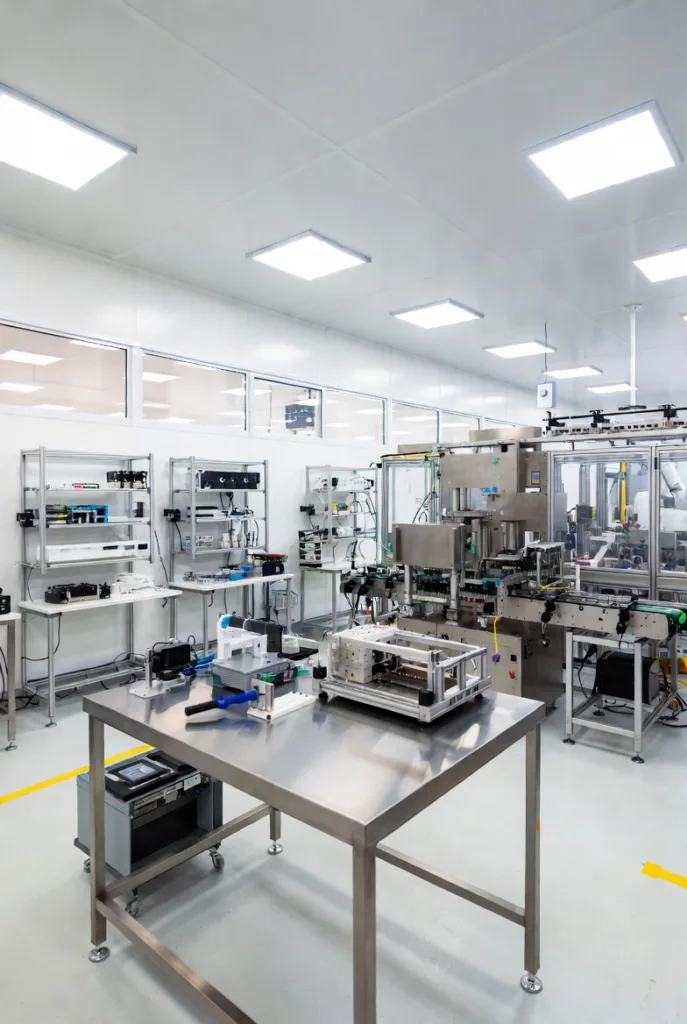
Controlled Environment Assembly at SGH
Certain components require controlled assembly environments to protect against contamination, particulate exposure or cosmetic compromise.
SGH operates a Class 8 cleanroom assembly environment to support customers in regulated and contamination-sensitive sectors. This capability integrates with our injection moulding operation to ensure dimensional integrity and cleanliness are maintained through to final assembly and dispatch.
Cleanroom manufacturing is not solely about environmental classification; it requires disciplined material handling, process control and traceability.
What Class 8 Cleanroom Classification Means
A Class 8 cleanroom environment is designed to limit airborne particulate contamination to defined thresholds appropriate for many regulated and technical applications.
Within our cleanroom environment, we control:
- Air filtration
- Personnel access
- Material movement
- Assembly procedures
- Cleaning protocols
This controlled environment supports applications where particulate management is critical.
What Is a Class 8 Cleanroom?
A Class 8 cleanroom is defined under ISO 14644-1 as a controlled environment where airborne particle concentration is limited to 3,520,000 particles per cubic metre at 0.5 microns and larger. Environmental parameters such as air filtration, pressure differentials and airflow patterns are managed to reduce contamination risk during sensitive operations.
While not suitable for high-risk sterile manufacturing, a Class 8 cleanroom is widely used for regulated assembly, medical device sub-assembly and applications requiring controlled handling of precision injection moulded components. At SGH, this environment supports quality assurance, traceability and compliance within technically demanding sectors.
Cleanroom Assembly Integration
At SGH, moulding and cleanroom assembly are integrated operationally.
While injection moulding is typically performed within our primary production areas, components requiring controlled handling are transferred under structured protocols for assembly within the cleanroom environment.
This allows us to combine:
- Precision moulding
- Controlled assembly
- Batch-level traceability
- Validated packaging procedures
without introducing unnecessary complexity into core production.
Applications Supported
Our cleanroom assembly capability supports customers including DePuy (Johnson & Johnson) and Oxylitre, where dimensional stability and cleanliness are critical.
Applications may involve:
- Precision sub-assemblies
- Medical-adjacent components
- Controlled packaging operations
- Contamination-sensitive parts
Cleanroom discipline protects both functional performance and brand integrity.
Material Handling and Traceability
Material handling within cleanroom assembly follows structured procedures.
This includes:
- Controlled storage of moulded components prior to assembly
- Batch traceability documentation
- Segregated handling where required
- Structured packaging and labelling
Insight123 integration, completing March 2026, will further strengthen barcode-driven traceability.
From H2 2026, the SGH Client Portal will provide batch-level QC documentation and tool service history visibility.
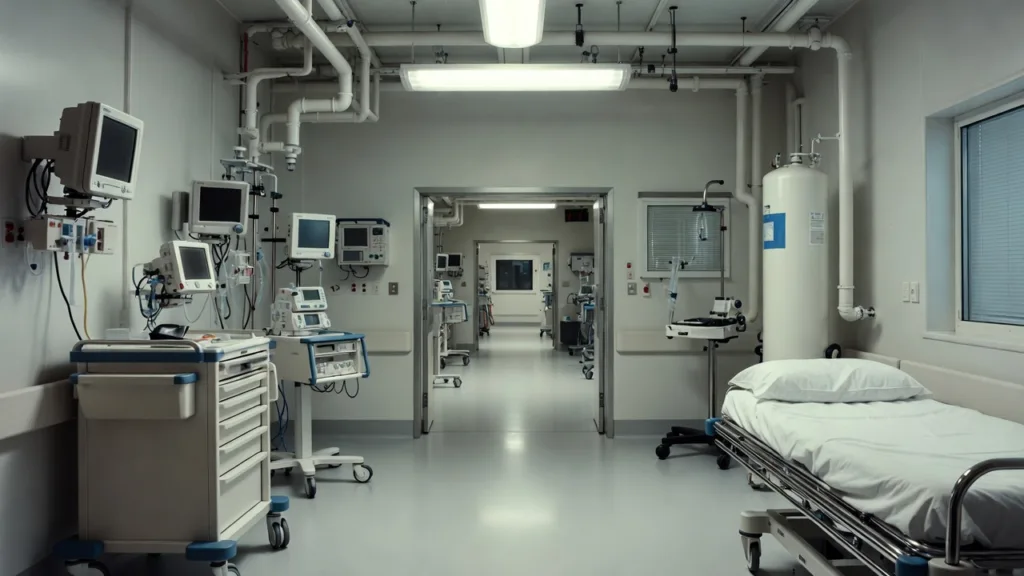
Dimensional Control in Cleanroom Assembly
Dimensional integrity remains central to cleanroom manufacturing.
Prior to assembly, moulded components undergo:
- Batch-level inspection
- Dimensional verification where required
- Cosmetic review
Validation protocols established during tool introduction remain in force during ongoing production.
Preventative servicing intervals—annual, six-monthly or quarterly depending on cycle volume—ensure that dimensional drift does not compromise assembly quality.
Tooling Strategy for Cleanroom Assembly Projects
Tooling decisions influence cleanroom performance.
Material choice, shrinkage behaviour and surface finish must align with cleanliness requirements. Abrasive or high-temperature materials may require adjusted servicing frequency to protect cavity surfaces and cosmetic finish.
DFM therefore considers not only mouldability, but also downstream assembly implications.
Supporting Regulated Sector Requirements
SGH maintains ISO 9001 certification (over 20 years) and achieved ISO 14001 accreditation in January 2026. ISO 13485 is targeted for FY27 to further strengthen medical-sector capability.
Where required, we support:
- PPAP Level 3 and Level 5 documentation
- ISIR reporting
- Material certification
- Structured validation processes
Cleanroom assembly capability integrates with our broader quality system rather than operating independently.
High-Mix Cleanroom Capability
Operating within a high-mix environment of approximately 1,000 SKUs annually requires controlled planning even within cleanroom operations.
Assembly scheduling aligns with:
- Production batch release
- Tool servicing intervals
- Stockholding strategy
- JIT delivery requirements
This ensures cleanliness discipline is maintained without disrupting production flow.
Energy Efficiency and Environmental Control
Controlled environments carry inherent energy demand.
Through CAPEX investment, SGH has achieved a 9% electrical efficiency improvement across operations, with a further 20% targeted over five years. Our 100 kWp solar installation contributes to peak demand reduction.
Environmental responsibility under ISO 14001 integrates with cleanroom operations, supporting broader ESG objectives.
Transparency and Future Visibility
Cleanroom assembly performance will form part of the SGH Client Portal (H2 2026), providing visibility of:
- Batch-level QC documentation
- Delivery performance
- Tool service history
- Scope 3 emissions calculations
This transparency reinforces supply chain confidence for regulated and technically demanding sectors.
To see how cleanroom assembly integrates with broader tooling and production capability, explore our Validation & Regulated Manufacturing services.
Our Class 8 cleanroom capability supports programmes in medical and regulated manufacturing environments.
If your project requires controlled assembly or contamination-sensitive handling, we can review environmental classification needs and integrate moulding with structured cleanroom assembly.