
Low Volume & High Mix Manufacturing
Part of SGH Technical Resource Centre
Low volume, high mix injection moulding requires structured production control, disciplined scheduling and flexible machine allocation within a UK manufacturing environment. Not all manufacturing programmes require high-volume, single-SKU production. SGH specialises in low volume, high mix manufacturing, supporting customers with complex product portfolios and varied demand patterns. Our machine range, tool management processes and planning systems allow us to maintain flexibility without compromising quality or delivery performance.
Explore related content:
What Is Low Volume Injection Moulding?
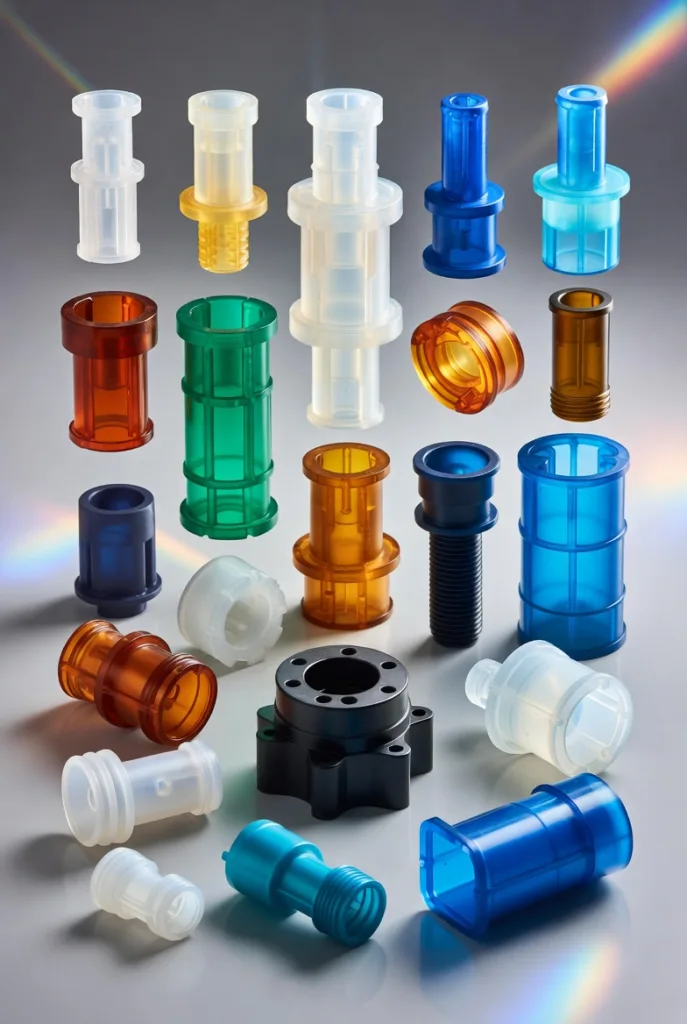
Low volume, high mix manufacturing refers to a production environment where numerous different components are produced in relatively modest batch sizes rather than a small number of high-volume, repetitive parts.
At SGH, this model is central to how we operate. In FY26 we supported approximately 1,000 active SKUs, producing 3,583,000 components across a wide range of sectors. This requires structured planning, disciplined tool management and flexible machine allocation across our 25-press fleet.
Low volume, high mix is not a compromise on efficiency. When engineered correctly, it provides agility without sacrificing quality or dimensional control.
Why High Mix Manufacturing Requires Structure
Managing approximately 1,000 active SKUs annually requires disciplined scheduling, tooling readiness and structured quality control. A high-mix environment introduces complexity in:
- Tool changeovers
- Press allocation
- Material handling
- Batch traceability
- Dimensional verification
- Stockholding strategy
Without structured systems, high mix quickly leads to instability and inefficiency.
- Defined production scheduling
- Tool lifecycle tracking
- Preventative maintenance alignment
- Batch-level inspection
- Integrated warehousing
This allows us to maintain performance even with varied production frequencies.
Typical Batch Sizes in Low Volume Injection Moulding
Typical production characteristics include:
- Low-volume average batch size: approximately 700 units
- Higher volume batch sizes: up to 24,000 units
- High-runner components: approximately 1,000,000 units annually
- Approximately 1,000 active SKUs per year
This spread requires flexibility in press selection and scheduling.
Our 20T–650T machine range enables us to align tooling to the correct press rather than forcing production into suboptimal tonnage categories.
Machine Allocation and Press Flexibility
SGH operates 25 injection moulding machines, including electric and hydraulic presses.
Low-tonnage machines support smaller precision components and micro parts, including our 6-cell 20T Manumould line transitioning to Babyplast Mini automation.
Higher tonnage electric presses, including our 650T Haitian and 350T Billion machines, provide stable processing for larger or structural components.
Press selection in a high-mix environment is not arbitrary. It is coordinated to:
- Low-volume average batch size: approximately 700 units
- Higher volume batch sizes: up to 24,000 units
- High-runner components: approximately 1,000,000 units annually
- Approximately 1,000 active SKUs per year
Tool Changeovers and Set-Up Discipline
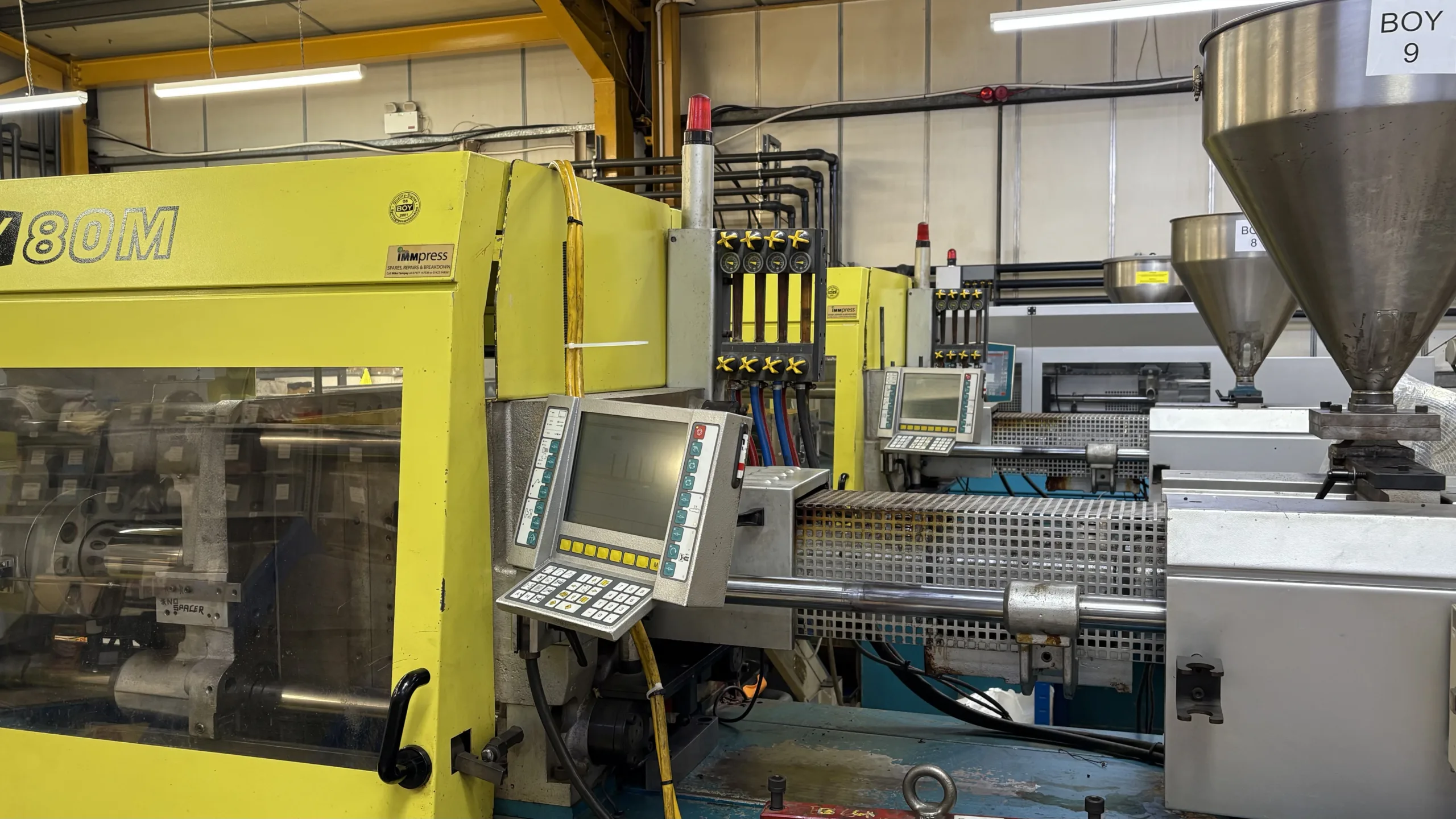
Frequent tool changeovers are inherent in high-mix production.
At SGH, changeover discipline includes:
- Structured tool storage
- Pre-changeover inspection
- Documented set-up parameters
- Batch-level dimensional verification
This ensures that dimensional stability is maintained between runs and across different production periods.
Integration with Tool Lifecycle Management
High-mix production increases the importance of preventative servicing.
Tools with lower annual volumes may require less frequent servicing, while higher cycle tools demand closer monitoring.
Service frequency at SGH is aligned to annual cycle volume:
- High-mix production increases the importance of preventative servicing.
- Tools with lower annual volumes may require less frequent servicing, while higher cycle tools demand closer monitoring.
- Service frequency at SGH is aligned to annual cycle volume:
Tool card documentation records service history, ensuring consistency across changeovers.
Warehousing and Stockholding Strategy
Low volume production does not mean unstable supply.
SGH operates 10,000 sq ft of dedicated finished goods warehouse space. Where required, we support structured 6–12 week safety stock programmes.
This enables:
- Stable JIT supply
- Reduced customer inventory pressure
- Protection against short-term production variability
Kanban system integration, completing October 2026, will further strengthen planning transparency.
Supporting Own-Brand and Acquired Product Lines
As part of our bolt-on acquisition programme, SGH currently owns and produces 18 proprietary SKUs for direct-to-market supply.
Operating as both manufacturer and brand owner reinforces our understanding of:
- Inventory management
- Lifecycle cost control
- Market responsiveness
- Dimensional consistency over time
This experience strengthens our support for external customer programmes.
High Mix and Dimensional Control
Dimensional stability in a high-mix environment requires consistent validation.
Each batch undergoes structured inspection before release. CMM and manual measurement processes protect critical dimensions, particularly for regulated or tight-tolerance components.
Insight123 integration, completing March 2026, will introduce barcode-driven traceability across production, further strengthening batch-level control.
High Mix and Energy Efficiency
Managing varied production loads across 25 presses requires careful energy coordination.
SGH has achieved a 9% electrical efficiency improvement through CAPEX investment, with a further 20% reduction targeted over five years.
Our 100 kWp solar installation contributes additional peak demand reduction, improving environmental performance across both low and high-volume production.
Supply Chain Agility in Injection Moulding
High mix manufacturing is particularly valuable for:
- Phased product launches
- Product updates
- Engineering revisions
- Variable market demand
Shipping to 13 countries, SGH supports structured international supply programmes without sacrificing production flexibility.
Protecting Stability in Complex Manufacturing
High mix does not equate to high risk when managed properly.
By integrating:
- Structured DFM
- Controlled validation
- Preventative tool servicing
- Warehousing strategy
- Data visibility through Insight123 and the SGH Client Portal
we maintain dimensional integrity and delivery performance across a complex product portfolio.
If your manufacturing programme involves multiple SKUs, phased demand or complex scheduling, we can assess how a structured low volume, high mix model can improve stability and cost control.