
Sustainability & Scope 3 Reporting
Part of SGH Technical Resource Centre
Sustainability at SGH is embedded in how we invest, manufacture and report. From energy-efficient machinery and localised production through to structured environmental accreditation and upcoming Scope 3 reporting capability, we are building measurable transparency into our operations. Sustainability in injection moulding requires measurable environmental governance, energy efficiency and transparent reporting across the supply chain. This page outlines how environmental governance integrates with real manufacturing practice.
Explore related content:

Sustainability Integrated into Injection Moulding Operations
Sustainability at SGH is embedded in operational practice rather than presented as a standalone initiative. Manufacturing performance, energy efficiency, tooling strategy and material selection all influence environmental impact.
We achieved ISO 14001 accreditation in January 2026, formalising our environmental management system and aligning sustainability governance with our existing ISO 9001 quality framework.
Our objective is measurable improvement, not symbolic commitment.
Energy Efficiency and Operational Improvement
Energy consumption is one of the most significant contributors to environmental impact in injection moulding.
Through structured CAPEX investment and process optimisation, SGH has achieved:
- A 9% electrical efficiency improvement
- A further 20% reduction target over the next five years
Our 100 kWp solar installation contributes measurable peak demand reduction and supports long-term carbon mitigation.
Energy efficiency improvements are achieved through:
- Press optimisation and selection discipline
- Gradual integration of electric presses
- Cycle time stability
- Infrastructure upgrades
Environmental improvement is therefore aligned with operational efficiency.
Scope 1 and Scope 2 Considerations
Direct emissions (Scope 1) and purchased energy emissions (Scope 2) are addressed through:
- Energy reduction initiatives
- Infrastructure investment
- Solar generation
- Continuous monitoring under ISO 14001
These measures reduce operational exposure while supporting client ESG objectives.
Scope 3 Emissions – Extending Transparency
Scope 3 emissions represent indirect emissions within the broader supply chain, including:
- Raw material production
- Tooling manufacture
- Freight and logistics
- Packaging
Historically, Scope 3 visibility has been limited in SME manufacturing environments. SGH is developing formula-based Scope 3 calculation capability linked directly to production data.
What Are Scope 3 Emissions in Manufacturing?
Scope 3 emissions refer to indirect carbon emissions occurring across a company’s value chain, including raw material sourcing, tooling manufacture, transportation and downstream logistics. In injection moulding, Scope 3 can represent a significant proportion of total environmental impact. Structured reporting provides procurement teams with improved visibility and supports supplier selection aligned to ESG objectives.
How Scope 3 Reporting Will Function at SGH
Through Insight123 integration (completing March 2026), we will link:
- Machine cycle data
- Energy consumption metrics
- Material usage data
- Production batch volumes
This data will feed into formula-based Scope 3 calculations, allowing order-specific emissions estimation.
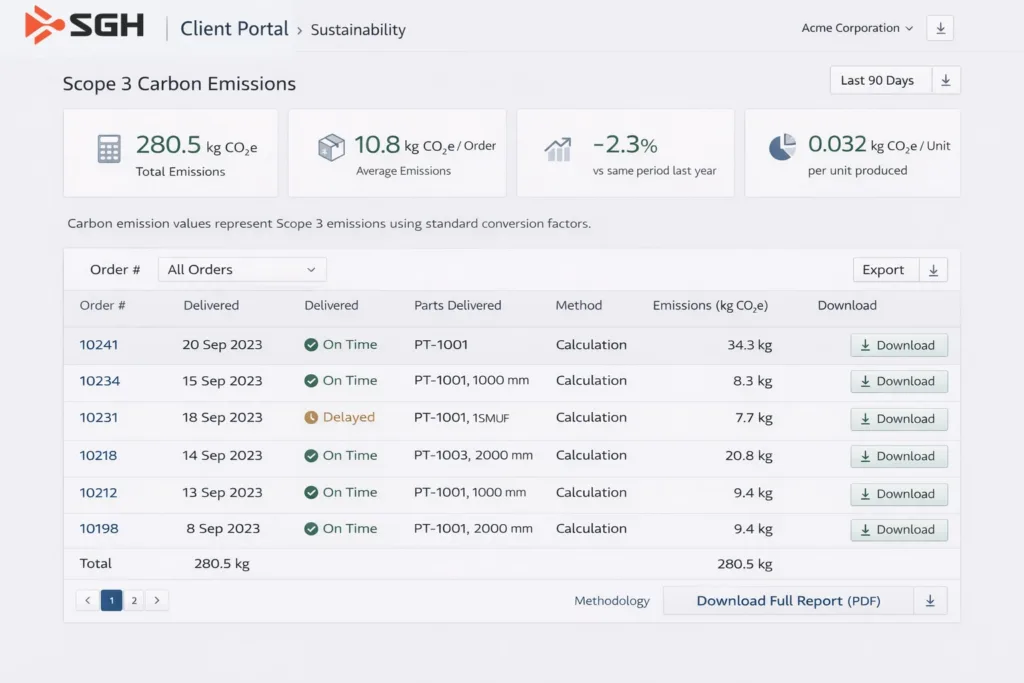
From H2 2026, the SGH Client Portal will provide visibility of:
- Order-level emissions data
- Tooling route carbon implications
- Batch-level production metrics
This transparency supports customer ESG reporting and procurement governance.
Tooling Strategy and Carbon Impact
Tooling route selection influences carbon footprint.
Overseas tooling involves:
- International freight
- Validation shipment cycles
- Potential rework transport
UK-based tooling may reduce shipping-related emissions and shorten modification cycles.
During DFM and commercial review, tooling route implications—including carbon impact—are outlined transparently.
Sustainability considerations are therefore integrated into early-stage engineering decisions.
Material Selection and Environmental Impact
Material choice affects environmental performance through:
- Polymer carbon intensity
- Recycled content potential
- Processing temperature and energy demand
- Tool wear and lifecycle impact
Where appropriate, we can evaluate alternative materials with lower environmental impact while maintaining performance and dimensional stability.
Material decisions increasingly connect to measurable ESG outcomes.
High-Mix Manufacturing and Waste Control
Operating with approximately 1,000 active SKUs annually requires disciplined material and stock control to avoid waste.
Structured batch planning, preventative maintenance and validated production parameters reduce:
- Scrap rates
- Rework cycles
- Obsolescence risk
Energy efficiency improvements further support responsible production across varied batch sizes.
Environmental Governance, ISO 14001 and Certification
SGH maintains:
- ISO 9001 certification (over 20 years)
- ISO 14001 accreditation (achieved January 2026)
- ISO 13485 targeted for FY27
Environmental governance is therefore integrated into structured management systems rather than treated informally.
Certification supports customer audit requirements and strengthens supply chain transparency.
Sustainability as a Commercial Discipline
Environmental performance and commercial stability are not in conflict.
Energy efficiency reduces operating cost.
Preventative servicing reduces waste.
Accurate Scope 3 reporting supports procurement governance.
Local tooling may reduce carbon exposure.
Increasingly, OEM procurement decisions incorporate environmental performance alongside quality and cost. At SGH, sustainability is aligned with long-term supply reliability and transparent partnership.
Future Visibility Through the SGH Client Portal
The SGH Client Portal, launching H2 2026, will provide clients with:
- Delivery performance metrics
- Batch-level QC documentation
- Tool service history
- Order-level Scope 3 emissions estimates
This digital transparency reflects our commitment to measurable accountability rather than narrative claims.
If sustainability reporting, Scope 3 visibility or environmental certification are priorities within your organisation, we can outline how our manufacturing systems support measurable transparency and responsible production.