
Materials & Polymer Behaviour
Part of SGH Technical Resource Centre
Material selection in injection moulding directly influences dimensional stability, tool life and long-term performance within a UK manufacturing environment. At SGH, we work across a broad range of engineering polymers and understand how shrinkage, moisture absorption, thermal stability and mechanical properties influence both tooling and finished component performance. This guide explains polymer behaviour and how we translate material science into reliable production outcomes.
Explore related content:
Why Material Selection Matters in Injection Moulding
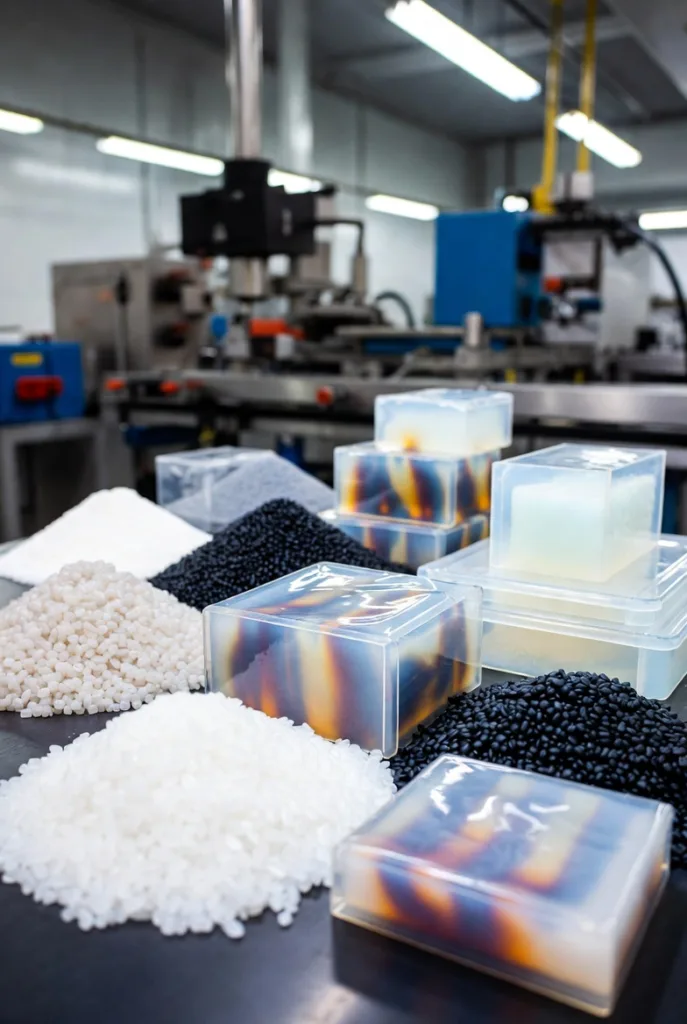
Material selection is one of the most critical technical decisions in any injection moulding project. Polymer behaviour influences dimensional stability, cosmetic finish, tool wear, cycle time, environmental resistance and long-term performance.
At SGH, material choice is evaluated during Design for Manufacture and validated prior to serial production. We process a broad range of engineering and commodity polymers across our 20T–650T machine fleet, and we understand how each material behaves under real production conditions.
Selecting the correct polymer protects both tooling investment and product performance.
Injection Moulding Materials Processed at SGH
We process a wide spectrum of materials, including:
- Nylon (including 15–30% glass-filled and UV-stable grades)
- Polypropylene (including flame retardant, talc-filled and glass reinforced variants)
- ABS (including UV-stable and glass-filled grades)
- Acetal (POM)
- Acrylic (PMMA)
- HDPE and LDPE
- Polycarbonate and PC-ABS
- TPE and TPU
- EPDM
- PBT
- Polystyrene and HIPS
- A wide range of the above as recyclable materials to support our ESG initiatives
Material selection is aligned to structural requirement, environmental exposure and regulatory context.
Polymer Shrinkage in Injection Moulding
Polymer shrinkage in injection moulding is a predictable but material-dependent behaviour that must be accounted for during tool design and cavity sizing. The extent and direction of shrinkage depends on:
- Material type
- Filler content
- Flow direction
- Cooling rate
- Wall thickness
For example:
- Polypropylene exhibits moderate shrinkage variability depending on grade
- Nylon may experience both thermal shrinkage and post-mould moisture absorption
- Glass-filled materials shrink directionally due to fibre alignment
During DFM, we incorporate manufacturer shrinkage data and production experience into cavity sizing calculations to ensure dimensional accuracy after cooling.
Material behaviour must be accounted for during tool design and cavity sizing. Failure to account for shrinkage correctly is one of the most common causes of dimensional deviation in injection moulding.
Moisture Sensitivity and Hygroscopic Materials
Certain engineering polymers, particularly nylon, absorb moisture from the environment.
If not properly dried before processing, moisture can lead to:
- Nylon (including 15–30% glass-filled and UV-stable grades)
- Polypropylene (including flame retardant, talc-filled and glass reinforced variants)
- ABS (including UV-stable and glass-filled grades)
- Acetal (POM
At SGH, material drying and preparation protocols are defined during validation. Hygroscopic materials are processed under controlled conditions to maintain stability and performance.
Filled and Reinforced Materials
Glass-filled and mineral-filled grades require enhanced tooling design and maintenance planning due to abrasive characteristics. Whilst these materials offer improved stiffness and strength, they introduce additional considerations:
- Increased tool wear
- Directional shrinkage
- Surface texture variation
- Higher injection pressures
Tool steel selection and servicing frequency are adjusted accordingly. Abrasive materials may reduce tool life if not managed proactively.
Lifecycle planning therefore incorporates material abrasiveness as part of the maintenance strategy.
Flame Retardant and Specialist Grades
Where applications require compliance with safety or regulatory standards, flame retardant grades may be specified.
These grades can:
- Alter flow characteristics
- Increase processing temperature requirements
- Influence cosmetic finish
- Affect dimensional stability
Material validation trials are therefore essential before serial production release.
Material Selection, Tool Wear and Lifecycle Impact
Tool longevity is directly influenced by polymer behaviour.
Factors affecting tool wear include:
- Glass fibre content
- Mineral fillers
- Processing temperature
- Injection pressure
Typical tool life at SGH ranges between 100,000 and 150,000 cycles, but material choice may accelerate or extend that lifespan.
Preventative servicing frequency is adjusted accordingly:
- Under 50,000 cycles annually – annual servicing
- Over 50,000 cycles annually – six-monthly servicing
- Over 100,000 cycles annually – quarterly inspection
Material decisions made at DFM stage directly influence long-term maintenance cost.
Material Selection and Dimensional Control
Tolerance capability is closely linked to polymer behaviour.
Materials with high shrinkage variability or moisture sensitivity may require:
- Wider tolerance allowances
- Enhanced cooling design
- Additional validation cycles
Where tight tolerances are required, material selection must be aligned with achievable dimensional stability.
At SGH, dimensional feasibility is assessed during DFM in parallel with material evaluation.
Environmental Performance and Sustainability Considerations
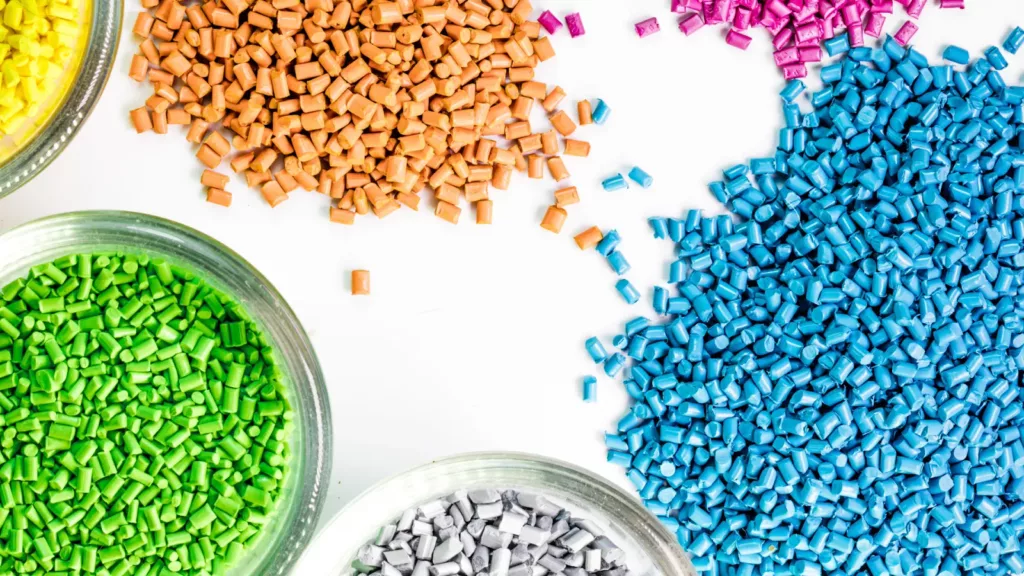
Material selection also influences environmental footprint.
Considerations include:
- Recycled content potential
- Energy consumption during processing
- Weight optimisation
- Carbon intensity of raw material supply
As part of our sustainability programme, supported by ISO 14001 (achieved January 2026), we are integrating formula-based Scope 3 emissions reporting linked to production data.
Material choice will therefore increasingly connect to measurable carbon reporting through the SGH Client Portal.
Material Approval and Validation
Before serial release, material certification and validation are completed as required.
This may include:
- Supplier certification review
- Material data sheet confirmation
- Batch traceability documentation
- ISIR and PPAP documentation where required
Insight123 integration, completing March 2026, will strengthen barcode-based traceability of material batches across production.
Common Material Selection Pitfalls
Across the industry, common material-related issues include:
- Selecting polymer based solely on cost
- Failing to account for shrinkage variability
- Overlooking environmental exposure factors
- Ignoring long-term tool wear implications
- Substituting materials without DFM review
Early material evaluation reduces risk and prevents costly mid-project change.
Integrating Material Science with Manufacturing Strategy
Material selection at SGH is not isolated from production planning.
It influences:
- Press selection within our 20T–650T fleet
- Cycle time optimisation
- Tool servicing frequency
- Warehousing and stockholding strategy
- Long-term carbon reporting
This integrated approach ensures that polymer behaviour is understood not just theoretically, but within the context of real manufacturing performance.
Related Technical Guides:
If you are evaluating polymer options or reviewing performance concerns with an existing component, we can assess material suitability in relation to tooling, tolerances and lifecycle expectations.